
East Asian Technology Intelligence
Japan & China tech news — translated, contextualized, and delivered to your inbox.
Free. Unsubscribe anytime.
3 Takeaways This Issue
- By committing ¥5 trillion to flash memory expansion alongside SanDisk, Kioxia is positioning Japan to secure the critical storage layer of the global AI hardware supply chain before its projected 2029 production ramp-up.
- Rapidus is attempting to justify the premium pricing of its upcoming 2nm prototype chip production in Japan by promising customers a “Shinkansen-like” turnaround time that is twice as fast as TSMC’s standard fabrication schedule.
- SoftBank’s negotiation for a majority stake in Norway’s 1X Technologies reveals Masayoshi Son’s strategy to bypass Japan’s slow hardware development cycles by importing European humanoid robotics expertise to power domestic factory automation.
This Issue’s Analysis
The Signal
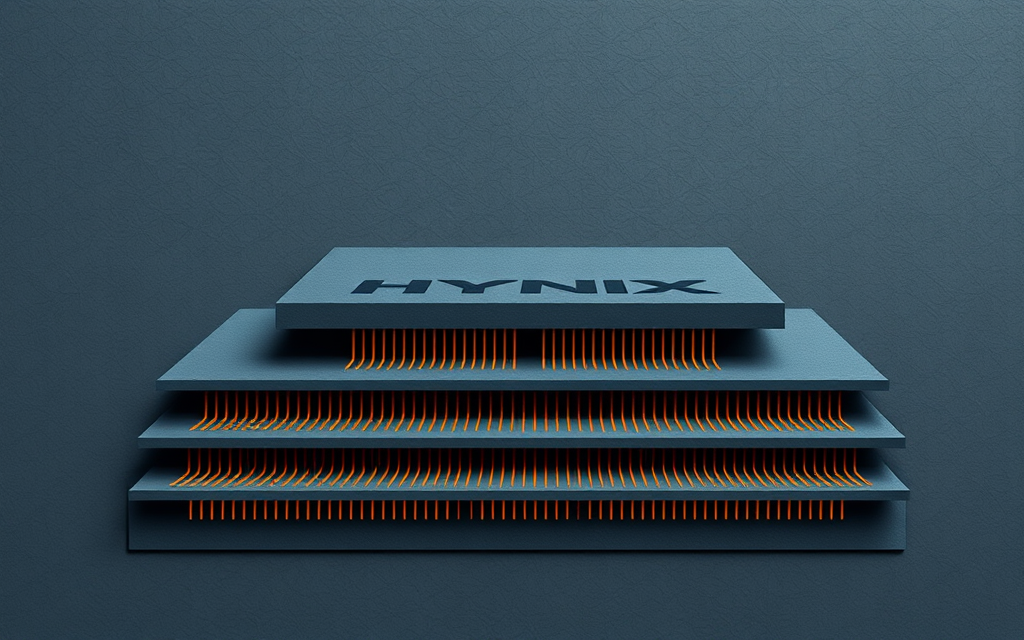
SK hynix’s Indiana HBM Plant: A 2029 Target That Leaves the Core Fab in Korea
SK hynix has begun construction on its advanced packaging plant in West Lafayette, Indiana, with a goal of starting mass production of High Bandwidth Memory (HBM) by the second hal
Semiconductors & Hardware
Rapidus’s 2nm Speed Strategy: Why Shinkansen Pricing Is the New Bet for AI Chip Startups
Rapidus President Atsuyoshi Koike stated that strong demand for AI semiconductors and data centers is a “powerful tailwind” for the company’s planned 2nm chip mass production, whic
Semiconductors & Hardware
Kioxia and Western Digital Plan ¥5T Expansion to Secure AI Memory Supply
Kioxia and its joint venture partner SanDisk have announced a massive ¥5 trillion (over $31 billion USD) investment plan through 2032 to expand advanced NAND flash memory productio
Semiconductors & Hardware
Nvidia’s 106% Revenue Surge Signals Sustained Demand for Korean HBM Suppliers
NVIDIA reported Q2 revenue that surpassed analyst expectations, showing a 106% increase compared to the same quarter last year. This strong performance is primarily driven by conti
🧩 Pattern This Issue
- Japan: Rapidus targets high-value 2nm fabrication speed over cheap volume production
- Taiwan: ASUS pivots to physical AI and humanoid robotics platforms
- Korea: SoftBank pursues majority stake in Norwegian humanoid developer 1X
East Asian tech leaders are shifting focus from digital AI models to physical AI and hardware integration, positioning the region to monopolize the coming physical robotics supply chain while Western software firms remain decoupled from hardware execution.
Also This Issue
🇰🇷 Korea Signal
As reported in Korea — memory, chips and platform moves from Korean sources
🇰🇷 Robotics & Automation
SoftBank Reportedly Pursuing Majority Stake Acquisition in Home Humanoid Company 1X
SoftBank is reportedly in talks to acquire a majority stake in 1X, a Norwegian humanoid robotics company specializing in robots for home use. This move follows SoftBank’s earlier investment in 1X’s Series A round.
Why it matters: Masayoshi Son’s investment in robotics and AI has consistently aimed at a future where these technologies are integrated into daily life. This isn’t just a financial investment; it’s SoftBank picking a horse in the humanoid race, specifically targeting a future where such robots are a common sight in households and not just industrial settings.
For Western readers: Western robotics startups should understand SoftBank’s renewed focus on the humanoid sector, particularly for consumer applications, suggests a belief that the technology is maturing for broader adoption beyond industrial use cases. Look for accelerated competition in the home robotics market.
🇰🇷 AI & Machine Learning
SK Telecom’s ‘Action-Oriented Assistant,’ KakaoTalk, KT’s ‘Daum’: Everyone’s AI Strategy
This article outlines the distinct AI strategies of Korea’s major telecommunications and internet companies: SK Telecom (SKT) is focusing on an ‘action-oriented AI assistant‘ leveraging its universal language model (ULM) and telco data; Kakao is embedding AI features directly into its dominant KakaoTalk messaging platform; and KT is integrating AI into its ‘next’ (Daum) generation services, including its large language model (LLM) ‘Mi:dm’ and cloud infrastructure.
Why it matters: The race among Korea’s tech giants to integrate AI into their core services highlights that AI adoption is not just about model quality but about distribution and integration into daily user workflows. SKT and KT are leveraging their extensive subscriber data and network infrastructure, while Kakao leans on its ubiquitous messaging platform. This is a battle for daily relevance.
For Western readers: Western telecom and platform companies should observe how these Korean firms manage user privacy and data security while leveraging vast amounts of user data to train and deploy personalized AI, as regulatory approaches differ.
🇹🇼 Taiwan Silicon
As reported in Taiwan — foundry, hardware and enterprise IT from the Taiwanese press
🇹🇼 Robotics & Automation
ASUS Pivots Fully to Physical AI in September, Humanoid Robots a Key Focus
ASUS is reorganizing its AIoT Business Group into the ‘Physical AI Solutions Business Group’ (PAS BG) starting September 1st, reflecting a strategic shift towards integrated AI solutions for the physical world. This new group will focus on smart manufacturing, autonomous platforms, and humanoid robots, consolidating existing robot divisions.
Why it matters: ASUS’s strategic pivot to ‘Physical AI’ is an effort to carve out new growth areas beyond its established PC and component businesses, which face mature market conditions. By integrating hardware manufacturing expertise with AI software and robotics, ASUS aims to become a platform provider for industrial automation, leveraging its own EMS capabilities as a proving ground before externalizing those solutions. This indicates a recognition that simply embedding AI in existing devices is not sufficient; the next wave of value is in physical systems that can act autonomously.
For Western readers: Western businesses in industrial automation and manufacturing should recognize that major East Asian electronics players like ASUS are actively developing and deploying integrated physical AI solutions, starting within their own supply chains. This will create new competition and potential partnership opportunities in areas like smart factory deployments and robotics, moving beyond traditional hardware sales.
🇹🇼 Policy & Regulation
Singapore’s Apex Logistics Under US Investigation for Alleged Nvidia Chip Smuggling to China
The US government is investigating Singapore-based logistics company Apex Logistics for allegedly assisting in the shipment of Nvidia AI chips to China, potentially violating US export controls. This marks the first time a logistics firm has faced US legal action for alleged involvement in the illegal semiconductor trade. The investigation focuses on the transport of AI server systems containing Nvidia chips from the US to Southeast Asia, ultimately reaching Hong Kong and then mainland China via a suspected smuggling route involving Taiwan.
Why it matters: The US investigation into Apex Logistics illustrates the Biden administration’s determination to seal off all avenues for China to acquire advanced AI chips, even targeting the logistical layers. It indicates that Washington views these supply chains as a systemic problem, not just an issue of specific manufacturers or end-users. For Asian logistics companies, it changes the risk profile dramatically; simply moving packages is no longer a neutral act if those packages contain controlled technology.
For Western readers: Western logistics companies operating in Asia, especially those handling transshipments involving US-origin components, must immediately audit their compliance procedures for US export controls, as even indirect involvement in prohibited shipments now carries significant legal risk.
🇹🇼 Policy & Regulation
US Justice Department and FBI Disrupt Chinese Hacker Proxy Network, Seize QScan and QTRouter Platforms
The US Department of Justice and FBI announced the seizure of the QScan and QTRouter hacking platforms, used by the China-backed hacking group QTFY, which is affiliated with Nanjing Xinjiuwei Network Technology. These platforms were employed to attack US critical infrastructure and networks, including NASA, the Federal Reserve, and the Departments of Energy and Justice. QScan automatically scans and infects IoT devices globally, adding them to the QTRouter proxy network to mask the origin of attacks.
Why it matters: This seizure of specific hacking infrastructure linked to China’s state security apparatus demonstrates an escalation in direct counter-cyber operations by the US, moving beyond attribution to active disruption. It confirms the long-held suspicion that commercially available network tools are being integrated into state-level cyber warfare, blurring the lines between private enterprise and government-backed offensive capabilities.
For Western readers: Western businesses and government agencies should anticipate increased sophistication and obfuscation in state-sponsored cyberattacks, and recognize that commercial proxy networks and IoT devices are now common vectors for these operations. Assume that infrastructure-level disruptions will become a more frequent tactic against such networks.
🇨🇳 China Watch
As reported in China — from Chinese-language technology media
🇨🇳 Semiconductors & Hardware
Huawei Pura X View Review: A Wide Slab Phone that Redefines Fun, Forgetting the BlackBerry
📊 Featured Chart
Source: ifanr review
Huawei has launched the Pura X View, a new smartphone in its Pura X series, featuring a unique 16:9.5 aspect ratio ‘wide slab’ screen. This design choice provides a larger effective display area than many Pro Max models, optimizing it for video consumption and e-reading while avoiding the software adaptation issues common with foldable phones. The device also boasts a substantial 7000 mAh silicon-carbon negative electrode battery and a robust camera system, positioning it as an ‘interesting’ alternative to traditional and foldable smartphones.
Why it matters: Huawei’s Pura X View shows the company is still capable of design innovation, even under US sanctions. By focusing on a distinct wide aspect ratio, they’re trying to capture market segments dissatisfied with either conventional ‘narrow’ phones or the software quirks of foldables, rather than just chasing the latest specs. This is about carving out a unique niche through hardware design that maximizes the HarmonyOS experience, much as Apple does with iOS.
For Western readers: Western hardware companies should recognize that Huawei is not simply playing catch-up; they are actively innovating in form factors and user experience, which could set new design trends. If Huawei’s ‘wide slab’ concept gains traction, it forces competitors to consider less conventional approaches beyond just folding screens.
Enterprise & Cloud
HarmonyOS Is Now the World’s Third-Largest Mobile Operating System, Huawei Says
Huawei announced that its proprietary HarmonyOS has surpassed Apple’s iOS to become the third-largest mobile operating system globally, with 400 million devices running the OS as of August 2026. This milestone comes seven years after the operating system’s initial launch, positioning it behind only Android and iOS in terms of user base.
Why it matters: Huawei’s success in scaling HarmonyOS underscores China’s broader strategy of technological self-sufficiency, reducing reliance on US-controlled platforms like Android. For Huawei, it’s a critical step in rebuilding its smartphone business despite ongoing sanctions.
For Western readers: Western mobile application developers should evaluate the HarmonyOS market for potential distribution opportunities, as a significant user base could warrant dedicated development efforts outside of Google Play and Apple App Store ecosystems.
🇨🇳 AI & Machine Learning
Zhipu GLM-5.3-Flash Launched with Sensetime’s Domestic Computing Power Support
Zhipu AI has officially launched and open-sourced GLM-5.3-Flash (320B-A18B), its first native multimodal model in the GLM-5 series. Sensetime’s SenseCore AI infrastructure is providing large-scale domestic computing power and token services, marking a significant step in the commercial application of Chinese-made AI infrastructure.
Why it matters: Chinese state-backed and commercially-driven efforts to build an end-to-end domestic AI stack are yielding increasingly capable models running on domestic hardware. This collaboration between a leading model developer (Zhipu) and an infrastructure provider (Sensetime) validates the notion that home-grown AI compute can handle demanding, large-scale inference workloads, challenging the long-held assumption that domestic solutions are inherently less cost-effective or scalable than Western equivalents. It’s more than just an announcement; it’s a deployed, commercial application demonstrating the performance and economic viability of this domestic stack.
For Western readers: Western businesses operating in China or assessing the global AI landscape should recognize that China’s push for AI self-sufficiency is moving beyond academic benchmarks to demonstrate practical, commercial deployment on domestic hardware. This means the domestic market is increasingly a self-contained ecosystem, reducing reliance on foreign technology for foundational AI capabilities and potentially creating a bifurcated AI technology landscape.
🔺 The Prism
Where US and East Asian technology interests intersect
AI & Machine Learning
CollaFuse: Collaborative Diffusion Models for Edge Computing
Researchers have introduced CollaFuse, a novel approach for distributed collaborative diffusion models that reduces computational burdens on client devices during image synthesis. Inspired by split learning, CollaFuse offloads computationally intensive processes to shared server resources while retaining data and lighter tasks locally, addressing challenges like data availability, computational requirements, and privacy. The method demonstrates improved performance and reduced information disclosure across datasets like CelebA, CIFAR-10, and Animals-with-Attributes2, making it suitable for edge computing applications.
Why it matters: The CollaFuse approach offers a practical way to deploy sophisticated generative AI on resource-limited devices, which is critical for smart cities, industrial IoT, and autonomous systems being developed across East Asia. This distributed model fits well with national strategies prioritizing data localization and privacy, as it reduces the need to centralize raw data for training.
For Western readers: Western companies developing AI solutions for East Asian markets, especially those focusing on smart manufacturing or IoT, should consider incorporating distributed models like CollaFuse to meet local computational constraints and data privacy regulations, which are becoming increasingly stringent.
AI & Machine Learning
Artificial Intelligence Models Can Predict and Collaboratively Modulate Human Memory Search
A recent study published on arXiv demonstrates that large language models (LLMs) can predict and track human memory trajectories during semantic search tasks more effectively than other humans. This research suggests LLMs could serve as cognitive tools to enhance human creative ideation and open-ended conceptual exploration, rather than merely replacing human effort.
Why it matters: The study validates a vision of AI as a co-pilot for advanced cognitive tasks, not just a labor replacement. For East Asian tech giants heavily invested in LLM development, this provides a framework for designing AI applications that integrate deeply with human creative processes, moving them into higher-value enterprise and consumer segments.
For Western readers: Western businesses should watch for East Asian LLM developers to prioritize ‘human augmentation’ features based on this research, potentially leading to sophisticated co-creation tools that could outpace models focused purely on automation.
AI & Machine Learning
Honda Uses AI Agents to Shorten Vehicle Development Times
Honda Motor is integrating AI agents into its vehicle body design process, aiming to cut development cycles from five years to three. This initiative blends AI assistance with the company’s traditional open brainstorming culture to accelerate design innovation within the Japanese automaker’s operations.
Why it matters: Honda’s integration of AI into a core engineering process demonstrates how Japanese manufacturers are adapting new technologies to their established, often hierarchical, corporate structures. The focus on reducing development time reflects competitive pressure in the global auto market, where faster cycles are crucial for staying relevant against nimble EV startups and established players alike.
For Western readers: Western automotive and industrial companies should recognize that Japanese firms are actively leveraging AI to accelerate their traditionally methodical development cycles, potentially narrowing the speed gap that some Western players assumed they held.