
Get the East Asia tech briefing
Translated, contextualized intelligence from Japanese & Chinese sources. Weekly and more when East Asia moves fast. Free.
3 Takeaways This Week
- Zhipu AI’s trillion-yuan valuation surge signals China’s AI startup market has achieved unprecedented scale beyond venture capital expectations.
- Intel’s Series 3 processors confirm a strategic pivot toward affordable physical AI hardware for enterprise adoption in price-sensitive markets.
- Japan’s Preferred Networks securing domestic sovereign model development directly challenges US dominance in edge-AI infrastructure for Japanese enterprises.
This week’s signal
Zhipu AI Breaches Trillion Yuan Market Cap: What Is Driving the Surge?
The reported one trillion yuan ($140 billion USD) valuation for Chinese AI startup Zhipu AI changes how Western AI companies compete. This valuation shows the strong, state-backed capital available to China’s domestic companies. This isn’t just a funding round. It is a clear signal of Beijing’s commitment to AI self-reliance. Its market capitalization is larger than many established Western tech firms. This challenges any idea that focuses only on the difficulties Chinese firms face.
For Western readers, it is important to understand how this news is received in China. Western media might describe this as a speculative bubble or a sign of China’s closed financial system. However, Chinese media outlets like Pandaily present Zhipu AI’s rise as a win for national strategic planning and technological skill. This story highlights a shared belief in domestic ability. It is also a strategic response to what China sees as Western efforts to contain its technology. The mood in China is one of validation and national pride. This is very different from any outside doubt. This valuation’s size, achieved without much international capital or broad market access, shows the unique capital flow in China’s tech sector. There, industrial policy and strategic goals can drive valuations to levels that seem separate from normal market measures.
This surge links directly to the wider trend of “national champions” in East Asian technology. This strategy is visible in Japan, South Korea, and especially China. Beijing is not just supporting startups. It is building an ecosystem designed to produce global leaders in important sectors. Zhipu AI is a good example of this intentional effort. It benefits from favorable policies, strategic investment funds, and an unspoken goal to achieve technological equality or superiority. This means that even with export controls and geopolitical tension, China’s internal market and capital allocation methods are strong enough. They can create companies that can compete with, or even surpass, Western companies in size and ambition.
We should watch not just Zhipu AI’s product development, but also how this valuation leads to actual market presence and technological advances. The main question is whether this strategic capital helps create real innovation that can compete globally. We also need to see if it mainly serves a domestic purpose. The next few months will show if Zhipu AI, and other highly valued Chinese AI firms, can turn this huge valuation into concrete, exportable technological leadership. If they do, it will reshape the global AI competitive landscape.
🗾 Japan Radar
What Japanese media is reporting that Western outlets miss
🗾 Semiconductors & Hardware
Intel ‘Series 3’ Shines in Physical AI, Can ‘Wildcat’ Deliver?
Intel announced its Core Series 3 processors targeting price-sensitive users, built on the same Intel 18A process as its premium Ultra Series 3 but with reduced specs including a lower NPU (15-17TOPS vs. 50TOPS) and simplified architecture. The product is positioned as ‘Wildcat’ to compete in mainstream PC markets while emphasizing edge AI capabilities for physical systems like robotics. Japanese media frames Intel’s ‘Wildcat’ as a response to China’s domestic semiconductor cost pressures, highlighting how East Asian manufacturers demand hardware optimized for on-site AI workloads rather than cloud-centric solutions.
For Western readers: Western OEMs must accelerate edge-AI-optimized chip designs to capture market share in Japan and China’s $12B industrial automation sector.
🗾 AI & Machine Learning2 STORIES
Japan’s AI Push: Domestic Models & Edge Hardware for Enterprise
Japan is making significant strides in developing a sovereign AI ecosystem, with Preferred Networks launching its cost-effective, full-stack ‘PLaMo 3.0 Prime’ AI model designed for Japanese enterprise. Concurrently, PFU introduced a palm-sized edge AI computer, demonstrating a parallel focus on domestic hardware deployment to enable AI processing closer to the source of data.
Why it matters: Japanese media frames this as critical for national tech sovereignty, contrasting Western coverage that emphasizes technical specs over geopolitical implications. The free tier lowers barriers for Japanese SMEs to adopt domestic AI.
For Western readers: Western AI providers must accelerate Japan-specific optimizations or risk losing enterprise contracts in a market prioritizing data localization and cost efficiency.
Policy & Regulation
China Expo Draws Nvidia, Apple, Micron Amid AI Supply Chain Controls
US tech giants Nvidia, Apple, and Micron led foreign participation at Beijing’s China International Supply Chain Expo on June 22, 2026, even as China added more US firms to its export control list the same day. The event underscores Beijing’s dual strategy of courting key Western technology partners while tightening regulatory guardrails around AI supply chains. This demonstrates Beijing’s active management of AI supply chains amid US-China friction, forcing Western firms into delicate balancing acts while influencing Japan’s semiconductor equipment export strategies and dual-use control negotiations.
For Western readers: Western tech firms must prepare for increasingly selective access to China’s AI market through strategic partnerships and compliance with evolving export controls.
Startups & Funding
ByteDance sidelines listing as China’s first $1 trillion valuation nears
ByteDance has postponed its initial public offering (IPO) as it approaches a $1 trillion market valuation amid China’s economic resilience and rising investor confidence. The strategic delay reflects the company’s cautious approach to global capital markets in an era of heightened U.S.-China tensions, aligning with broader trends of Chinese tech firms prioritizing domestic strategy over international listings. ByteDance’s move underscores how Chinese tech firms are leveraging domestic market strength to offset Western capital access challenges, directly impacting AI-driven content platforms’ global expansion strategies. Western media often frames IPO delays as setbacks, but local coverage emphasizes strategic maturity amid China’s regulatory evolution.
For Western readers: Western investors should recalibrate expectations for Chinese tech valuations and prioritize partnerships with state-backed entities rather than pursuing public market entry in the near term.
🇨🇳 China Watch
China’s technology moves, framed for Western readers
Robotics & Automation
Foxconn Industrial Internet Ramps Up Construction on RMB13.1 Billion Ganzhou Smart Manufacturing Phase II
Foxconn Industrial Internet Co., Ltd. has commenced construction of the second phase at its Ganzhou smart manufacturing facility, investing RMB13.1 billion (approx. $1.85 billion) to expand AI-driven automation capabilities. The project aligns with China’s national industrial digitalization strategy under Made in China 2025. The investment represents a strategic pivot toward self-sufficient smart manufacturing infrastructure, accelerating China’s decoupling from Japanese robotics dominance (e.g., Fanuc) and reducing reliance on U.S. automation tech in critical industrial sectors.
For Western readers: Western manufacturers must accelerate partnerships with Chinese firms or develop cost-competitive alternatives to retain market share in China’s rapidly digitizing factory ecosystem.
AI & Machine Learning
Xiaomi vs Huawei On-Device AI: Decoding East Asian Smartphone Giants’ AI Strategies
Chinese smartphone makers Xiaomi and Huawei are aggressively integrating on-device AI capabilities into their new flagship devices, such as Xiaomi’s ‘Xiaomi HyperMind‘ and Huawei’s ‘Kirin AI’ and Pura 70 series. This push is driven by the desire to differentiate products, enhance user experience through personalized features, and reduce reliance on cloud-based AI, particularly in a competitive domestic market. The focus on on-device AI by major Chinese players like Xiaomi and Huawei indicates a broader trend towards decentralized AI processing, which could reshape the semiconductor and software supply chains in East Asia. Western media often underplays the sophistication of these localized AI solutions, focusing instead on global market share without deep dives into regional technological innovations.
For Western readers: Western chipmakers and software developers need to monitor these trends closely, as the shift to on-device AI could alter demand for specific processors and AI frameworks, potentially creating new market entry barriers or partnership opportunities.
Robotics & Automation2 STORIES
China’s Logistics Robots Ascend: Mass Automation & Workforce Reboot
Chinese tech giants JD.com and Cainiao are aggressively accelerating logistics automation with advanced robotics, from climbing robots in warehouses to widespread delivery automation. This surge in AI-driven efficiency is prompting proactive, large-scale workforce retraining initiatives, signaling a significant societal and economic shift.
Why it matters: This initiative showcases how major Chinese tech firms are grappling with the societal implications of advanced automation and AI, particularly concerning job displacement. Western media might focus more on the job loss aspect, whereas the local framing emphasizes adaptation and retraining.
For Western readers: Western logistics companies and policymakers can observe China’s approach to large-scale workforce transition in an AI-driven economy, offering insights into future operational and social challenges.
Semiconductors & Hardware
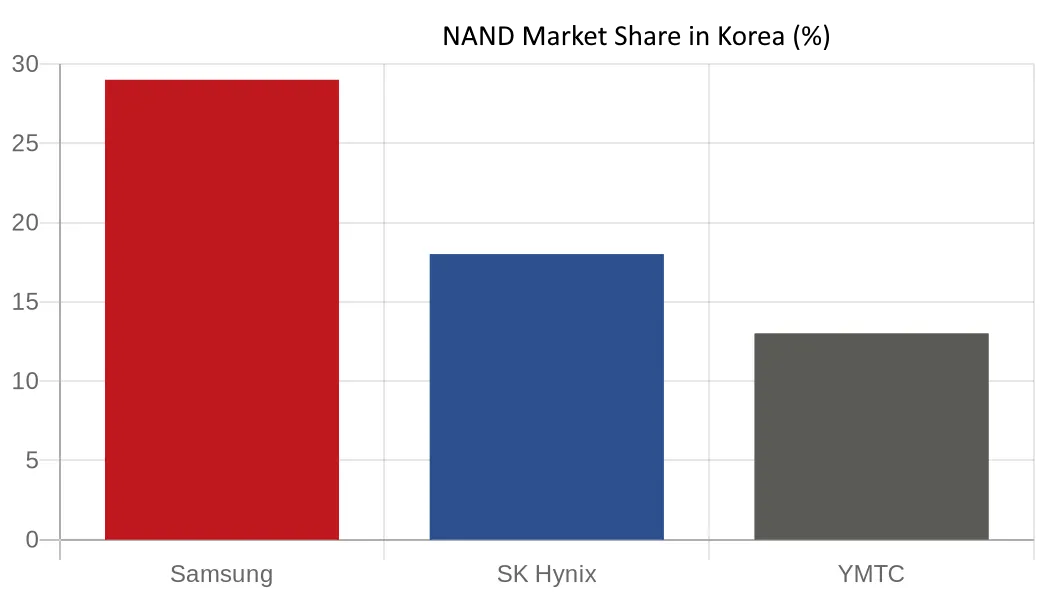
YMTC’s NAND Market Share Climbs to 13% Amid Intensified Global Competition
📊 Chart of the Week
 Source: Counterpoint Research · in %
Chinese memory chipmaker YMTC has significantly increased its global NAND flash memory market share from 8% to 13% year-over-year, becoming the fastest-growing company in the sector. This rapid expansion is directly challenging the market dominance of major South Korean players Samsung and SK Hynix, who hold 29% and 18% revenue shares respectively. YMTC’s ascent demonstrates the effectiveness of China’s national semiconductor strategy despite external pressures, indicating a potential shift in the global memory chip landscape. Western media often frames this growth as a direct challenge to US policy effectiveness, while local coverage in East Asia emphasizes market dynamics and national technological progress.
For Western readers: YMTC’s rise means increased competition for Western memory chipmakers and potential geopolitical implications for supply chain resilience and technology export controls.
🔺 The Triangle
Where US, Japan, and China technology interests intersect
Semiconductors & Hardware
Seok-Hee Lee Appointed Executive Vice President of Intel Foundry
Korean executive Seok-Hee Lee, former CEO of SK hynix and SK On, joins Intel Foundry as EVP to lead advanced packaging and system integration. His appointment underscores the strategic importance of East Asian semiconductor talent in global chip manufacturing leadership. SK hynix’s leadership in memory packaging directly competes with Intel’s push, affecting regional supply chain dynamics as China accelerates chip self-sufficiency efforts. Western media frames this as a US talent acquisition but East Asian coverage emphasizes SK hynix’s strategic exit.
For Western readers: Western semiconductor investors should monitor Intel’s packaging roadmap for potential shifts in foundry market share against TSMC and Samsung.
Semiconductors & Hardware
US DoC Accuses ASML of Shipping EUV-Compatible Components to China
The US Department of Commerce has accused ASML of shipping components compatible with EUV machines to China, violating export controls. ASML denies the allegations, stating it has never shipped EUV machines or specialized components to China and that its systems are monitored for security compliance. This dispute occurs amid heightened tensions over semiconductor technology access in East Asia, where Taiwan hosts most low-NA EUV machines. The dispute directly threatens East Asia’s semiconductor supply chain stability, with Taiwan and Korea accounting for over 95% of EUV revenue. Western media frames this as US-China tension, but locally it highlights regional dependence on ASML access amid China’s aggressive chip development.
For Western readers: Western tech firms must reassess supply chain exposure to ASML-China partnerships given heightened export control enforcement risks.
Cross-Regional Analysis
MWC26 Shanghai: Exploring Technologies Shaping Everyday Life in China, with Focus on Mobile AI, Embodied Intelligence, and Non-Terrestrial Networks
MWC26 Shanghai will showcase cutting-edge technologies including 6G, mobile AI, Embodied Intelligence, and Non-Terrestrial Networks (NTN), highlighting their integration into daily life. The event will feature a strong presence of Chinese companies, particularly in satellite communications, with nearly 20 domestic firms exhibiting their innovations. China’s three major mobile operators have already secured satellite mobile communication licenses, underscoring a national push for pervasive connectivity. MWC26 Shanghai serves as a crucial platform for Chinese tech companies to demonstrate their capabilities in areas like satellite communications and embodied AI, reflecting Beijing’s strategic focus on indigenous innovation and technological self-reliance. This differs from Western media framing that often focuses on China’s role in the supply chain rather than its R&D leadership.
For Western readers: Western businesses should note the rapid deployment and commercialization of advanced technologies like NTN and embodied AI within China, which could indicate future market trends and competitive landscapes.
Startups & Funding
Antler Showcases 28 Asian Startups Building Autonomous AI Systems Beyond Copilots
Early-stage investor Antler has featured 28 startups from Korea, Japan, and Southeast Asia, demonstrating a regional pivot from AI copilots to autonomous systems. Over half of these companies are developing AI agents or AI-native businesses, spanning critical sectors like manufacturing, logistics, healthcare, and robotics. This showcase highlights a growing trend of East Asian innovation in AI systems capable of independent complex task execution. The shift towards autonomous AI systems from East Asian startups indicates a maturation of the regional AI ecosystem, challenging the narrative that East Asia is primarily a consumer or adapter of Western AI innovations. For Western businesses, this signifies increased competition and potential partnership opportunities in advanced AI applications.
For Western readers: Western businesses and investors should monitor these East Asian startups for disruptive technologies and potential competitive threats or acquisition targets in various industrial AI segments.
Semiconductors & Hardware
EE Power Asia 2026 to Spotlight Technologies Driving Next Era of Electrification
EE Power Asia 2026, organized by ASPENCORE (publisher of EE Times Asia), will convene East Asian industry leaders to discuss SiC/GaN power semiconductors critical for Japan’s industrial semiconductor dominance and China’s EV/renewable energy expansion. The event highlights regional tech ecosystems advancing electrification infrastructure amid growing demand for efficient power systems. East Asia’s regional focus on SiC/GaN adoption reflects national strategies to reduce reliance on Western power semiconductor imports, accelerating localized innovation in critical infrastructure for AI data centers and electric mobility.
For Western readers: Western hardware firms should prioritize supply chain diversification with Japanese SiC suppliers amid China’s rapid EV market growth and decarbonization policies.
AsiaAI.FYI ·
Written by Dick Weisinger ·
Subscribe
East Asian Technology Intelligence
Japan & China tech news — translated, contextualized, and delivered for Western readers.
Free. Unsubscribe anytime.